Thursday, April 23, 2015

Post 4: Policing of the Women's Body


Policing of the Women's Body


The policing of women’s bodies has existed since before the burst of the social media. In reality the policing of the woman's anatomy has existed for centuries. It’s just become more and more outrageous that we are having the same issues to the access to women's rights now in 2015 in the same manner of the 1960’s and 1970’s. In those earlier decades it was about the right to access to birth control and abortion rights, today; bureaucrats, predominantly men, tie up funds for these rights, place limitations and then try to control these rights to the woman's body when the right itself belongs to these women. A political system has taken precedence over women being able to choose what decision they want to make for their own anatomy. The media hypersexualizes women in a unscrupolous manner while dictating that if a woman were to indulge in sexual pleasure they are labeled a “whore” or “sexual deviant”.


The legislations and policies that are in effect today not only devalue women and their rights but it sends the message that we are not in control of ourselves. That whether or not I want to make a private decision about the body that I embody is not up to me but some bureaucrat whose religious beliefs affects my life.

“In 2011, 55 percent of all women of reproductive age in the United States lived in states hostile to abortion rights and reproductive freedoms. Waiting period, counseling, ultrasounds, transvaginal ultrasounds, sonogram, storytelling--all of these legislative moves are invasive,insulting and condescending because they are deeply misguided attempts to pressure women into changing their minds, to pressure women into not terminating their pregnancy as if women are so easily swayed, that such petty and cruel stall tactics will work (Bad Feminist 272).”

There are preventative measures after preventative measures to stop abortions yet the common sense solutions would be to provide birth control freely--yet that too is a problem. So  not only do you not have the right to get an abortion, you can’t even consume the pill to prevent you from getting you pregnant because men in suits believe that they shouldn't have to pay for women who live in a “slutty” manner.  its inexplicable that these politicians institutes these barriers that they have no right imposing. To prevent abortions in the first place the answer would be to provide the pill but that solution is not an acceptable one to these bureaucrats. Reproductive freedom has no business being in congress or any law related office where males lead the conversations. Its a womans body and their individual choice; that should be the final conversation however its just a negotiable part. Not only are there attempts to prevent abortions, limitations on birth control but if you have it their way and end up having a baby don't expect any maternity leave benefits be causes these men in suits don't push for that either, it seems that women's right altogether is ludicrous.
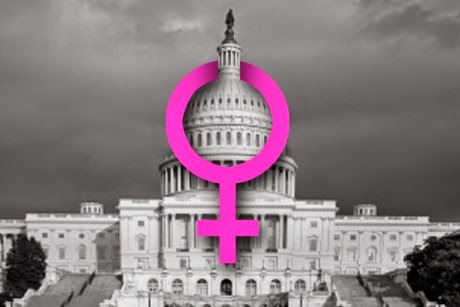


Women are made out to be whores for wanting a sexual life without wanting to get pregnant while men can reap the all the sexual benefits without taking any responsibility. The use of viagra isn't part of the political and legislative spectrum...there is no male version pill to kill off semen, so why is it that women somehow shoulder all the responsibility. Men can participate in the sexual act and not bother with the conversation that women must deal with.

When women are backed into a corner with no options and no rights by the state, rights that they are entitled too; they turn to self harm. Illegal abortions take place which results in death, sterilization and injury.


“Part of the radical feminist message offered by groups such as Redstockings was that abortion concerned all women equally. They maintained that every woman needed to get involved in challenging anti-abortion laws, because without the fundamental right to control reproduction in every instance, women remained subject to men (Nelson 15).


The message in media both empowers and subjects women to negative views as well. Although as a country we have come a long way in terms of women's right, the current legislations that stand in congress today in 2015 prove that misogynistic men controlling legislation about women's rights need to be stripped of this power. No man can or should make a decision a women should only be entitled too.

"If we wish to construct a feminism that is truly "sex positive," it must address the myriad forms of oppression that violate women's lives and bodies on a global scale. "Freedom in society can be measured by distribution of orgasms," reads another slogan of Wallace's Cliteracy project -- a statement that seems almost painfully ludicrous when we consider the millions of women worldwide whose freedoms, sexual and otherwise, are devastated on a daily basis by state violence, environmental degradation, poverty, racism, and the wide variety of other hardships women must tackle in the contemporary world, in addition to a lack of sexual gratification. Women's sexual empowerment is not an issue which can be separated from broader struggles for gender justice, and in order to support its realization, we must fight collectively for serious social and political change with the same passion and uncompromising desire we bring to our bedrooms."


    The recognition that is woefully denied to women needs to be apart of the discourse. In Harris-Perry's Crooked Room the independence the African American women seeks from the stereotypical image that is imposed upon them is simply unfair. The independence these women sought and also these characters portrayed in these literary works depict how strength in spite they displayed despite all the opposition they faced in a time of racism. And despite not dealing with these replicated issues we are dealing with men as the opposition as they try to police our bodies and enforce rights that do no belong to them. It sends the message hat women, cannot govern themselves and that we should be allowed too, which is just absurd.

"After I realized the extent to which men work from a base of unacknowledged privilege, I understood that much of their oppressiveness was unconscious (McIntosh)."

If these men come from a base of privileged and its recognized that they are unaware of all the realities, relates we as women face…then why should white men be make life altering decisions for women?


Work Cited

Gay, Roxane. “The Alienable Rights of Women.” Bad Feminist. Harper Perennial, 2014. Print.

Harris-Perry, Melissa V. “Crooked Room.” Sister Citizen: Shame, Stereotypes,
and Black Women in America. United States: Sheridan Books, Inc., 2011. 28-39.

McIntosh, Peggy “White Privilege: Unpacking the Invisible Backpack”

Nelson, Jennifer. "Introduction: From Abortion to Reproductive
Rights."Women of Color and the Reproductive Rights Movement. New York: New York UP, 2003. 1-20.


Sexism, Racism and Power in Advertising


                              Sexism, Racism and Power in Advertising

  Sexism is seeded into the mind on prepubescent children through the means of advertisements. Needs, wants, and desires are all created by advertisements which targets from the youngest age group of  infancy to the most elderly. The use of sexism, racism and power are used to establish these messages to drive the consumer audience to the shopping malls to make these purchases that fit this image. Predominantly the targeted consumer is women because of their shopping power in the home, beauty and clothing sectors.  


                                    "We are exposed to over 1500 ads a day constituting perhaps
                                          the most powerful educational force in society."-Kilborne

      Advertisement companies spend billions of dollars yearly to convey the message to consumers that who they are is not enough. The kitchen appliance are not good enough, the car you drive is not updated, that the jacket you are wearing is part of last seasons collections and essentially you as a person need more when in actuality--you don't.

    Racism is still apart of the conversation, it is still depicted and presented…the lack of colored women in magazines, on runaways, featured in media. It's nothing new; the perceived/sold view of beauty has always been the white blond haired blue-eyed bombshell. Although past the years this has improved slightly…we have more roles for African Americans, there are more multi ethnic races who are models and featured in advertising however the image is the same. Oversexualized images of airbrushed models with unrealistic standards for the general public.


   The objectification and sexualization is a go-to method for advertisers. Sex sells. It is that simple. Men drink up these images of theses dolled-up porcelain waxed-up "women" and believe this is the standard. And women feeling the pressure of society respond to these images by trying to attain this unreal beauty. They put this pressure on their mind, body and soul to diet, juice, and starve themselves for an image that can kill them. These children, preteens, and growing women feel the pressure of society forcing them to reach this level of "beauty" because of these detrimental
advertisements.  This in turn affects these developing girls with identity and health issues with an alarming rate of eating disorders on the rise. 

"Such research suggests not only that the mass media significantly affect the way audiences, particularly young audiences, think about themselves but the representations of the body in particular have resonance with self-identity and self worth" (Wykes 3).


The objectification and sexualization of women has lead to depression, body insecurities and health issues. In Susan Bordo's "Hunger As Ideology" she explores the how female's are depicted when indulging in meals comparatively to how men are depicted. While men can be insatiable in meals , women must be measured in their intake. In movie roles, music videos television shows they dine with a salad while the male will devour his steak. And if somehow the female character does has a hearty appetite she will be correlated to having the equivocal appetite of a lumberjack man. The only time food is excepted or displayed for women to enjoy is when its part of a sexual dialogue.
.


"In these commercials food is constructed as a sexual object of desire, and eating is legitimated as much more than a purely nutritive activity. Rather, food is supposed to supply sensual delight and succor-not as metaphorically standing for something else but on an erotic experience in itself" (Bordo 112).

    The media objectifies and demeans women on a continuous basis and uses sexuality to sell that image.  For years these companies have tried to desensitize the public and have tried to push the envelope, a prime example would be the Super Bowl Ads over the course of the last ten years. The sexual nature has only increased with time and continues to influence the youth of the nation; this sends the message that a women's worth can only be valued by their BMI index.

     These advertising companies uses sexual and racial tactics to draw the consumer in. They create a false need by creating a desire for the newest fragrance, technology, food and more. Companies use racial correlations by stereotyping different ethnicities to various products. 

     The end result of theses images cause young children to be influenced negatively, it puts an enormous about of pressure on women in terms of "standard of beauty" and it simultaneously also creates this rape culture by objectifying women to men, making women out to only be viewed as an object.  It is hard to not to be affected by these images that we see in our news feed and social media accounts. I am a college educated female who understands the abnormality of desiring to look like a model--yet when I see Kylie Jenner's full lips and thin shape I end up wishing that is the way I want to look as well. As a person who feels comfortable in her body and tries not to conform to what these magazines present the temptation and self criticism is extreme. If only I lost another five pounds, if I had that __(fill in the blank)____ then I could look like that too!

Of course, popular culture emanates this in the media, there is no escaping it. E! will tell you about the latest celeb weight gain and the hottest products that they have, CNN will dedicate a whole section on the entertainment industry and finally social media and these filtered images will expose you to these gorgeous people with perfect hair, teeth and skin--not to mention all their products as consumers.


As an individual who feels comfortable with my self-identity and my body image(almost always), I would say the best tactic to break away from these mainstream images is it first needs to start at home. As a mother to a three year old daughter, my first instinct will is to limit the amount of advertising my daughter sees as a way so she does not believe that this is the normal. I will try and teach her/show her real role models and that self worth and value is not measured by how you look in lingerie but with what is in your mind and heart. When it starts at home and from a young age, our children will then have some sort of idea of what real "standard of beauty" is to what the media tries to sell us. Making sure they a sense of who they are before being directly influenced by the media from that point I think being aware of television programs on PBS/ World LinkTV  and not being sucked in by gossip sites and news stories that feature all the Kardashian sisters is key. From an advertising perspective a prime example of alternative paths is how Dove tries to depict real women and not this sexualized vision like Victoria Secret. With other marketers following suit and this newly constructed "real" being explored there is change that seems to be happening. The continuous backlash that people have when these airbrushed pictures and unreal standards are given show that the tide is turning and with hashtags and trending nows it showcases how the public are becoming anti-advertisements. While it doesn't eliminate the cycle of sexism, it is a start and by educating young minds and also not becoming susceptible to this images and ideas we stand a good chance from being just another porcelain wannabe figurine.

Work Cited

Kilbourne, J., Rabinovitz, D., & Media Education Foundation. (2010). Killing Us Softly 4: Advertising's Image of Women.

Bordo, Susan. “Hunger as Ideology.” Unbearable Weight. Second Edition, Tenth Anniversary Edition. 

99- 133. University of California Press, 2004.

Wykes, Maggie and Gunte, Barrie. The Media and Body Image:  If Looks Could Kill. London: Sage 


           Publications Ltd., 2004. Print.


Wednesday, April 22, 2015

POST 4 Policing of Women's Bodies


The policing of women’s bodies is a common recurrence built of our capitalist supremacist patriarchal system of living that is so deeply ingrained, people rarely take notice of its happenstance. It is the foundational blood that runs through society’s woes. Through such policing and thought women’s bodies are devalued in society, further perpetuating the same objectifications, commodifications and depersonalizations of women adamantly and consistently. This is found in the political air we breathe and on a smaller scale, in social settings.
Women are commonly told how to dress and act towards their peers. Physical appearance, including body features and clothing, are constantly scrutinized by media and other women who are taught to scrutinize women and themselves to the harshest degree, in a way that men who identify as men would not receive. According to media, politics, government, your neighbors, etc. women are not more than their bodies and should only be valued and marked as other due to such bodies that presumptively can produce children. Pregnancy becomes a “public” rather than private experience (Gay 269).
The government regulates the choices women can make in terms of reproductive rights. This same government is generally run by old, white, conservative, men who do not take any time to learn about women’s reproductive health or sexuality before invoking their “knowledge” on the matter. Here’s a list of ridiculous things politicians have said in regards to women’s bodies: http://www.refinery29.com/2015/03/83469/things-politicians-said-about-women-bodies-rape
If legislative policies are not created for the health of women but for economic benefit to the state, then women's bodies are a commodity and creation of capital. Their bodies are vessels to bore children, essentially producing more capital (Nelson 2).
A major factor of the propagating and creation of body shaming is attributed to media. Television shows and films marked “comedies” frequently use overweight women as the butt of jokes. Shows that feature body positivity are usually canceled or are falsely “body positive.” CBS’s Mike and Molly is considered a proud representation of overweight people, however the show is ridden with the characters making jokes about their bodies and physical appearance. Then there are Hollywood films about the stereotype of the “nerd” turning into the "beauty". In these, the change in their physical appearance serves the purpose of appeasing the man’s, and the presumed male viewer’s, eye and gets the women what they want which is supposed to be the man, representative of their only source of happiness. The women viewers are expected to be passive, internalizing these ideas and applying them to their lives. In both these examples, women’s bodies then become a commodity to be bought, rebranded and sold back to them (Cortese 45).
I went to a high school that regulated what women students wore and enforced heavy restrictions with tough punishments to those who did not follow dress code. As part of this dress code, women could not wear skirts that did not go past their fingertips, they could not wear spaghetti straps or shorts, they could not expose any part of their midriffs. If a woman was caught wearing clothes that did not fit their enforced dress code, demerits were handed out. Then, depending on the number of demerits you were given, according to how many authority saw fit to give, the repercussions ranged from detention to even exclusion from student activities like prom. Not only were women objectified by school guards and authorities who would analyze their dress as they walked into the school building, but they constantly had to monitor if their skirts rode up and worry about punishment. The summer months were grueling, as there were no air conditioners in classrooms and women had to sit through class bundled up while men students could wear what they wanted. When this was questioned by many students, authorities said “spaghetti straps were too distracting for students.” If this statement were further explained, presumably the result would be: “tank tops where women’s shoulders are exposed are too distracting for the assumed heterosexual men in our classrooms, perhaps resulting in lower grades for them and lower acceptance rates of men to ‘good’ colleges. We cannot control men’s raging sexuality but we can certainly control how women appear in our educational space.” This, of course, speaks to the rape culture we live in--we readily blame the victim for her rape based on what she was wearing and what she was doing but we do not teach men not to rape.
A facebook page, “Feminism in *My High School Name Here* ” has sprung up explaining this dress code issue. An article about the issues with the dress code appeared in the school’s paper. When a school authority was asked why there was such strict enforcement on what women wear, she said “it is to teach women how to dress professionally in the workplace and beyond”. This would make sense if we were not allowed to wear sweatpants (different from yoga pants which were not allowed) which have never been deemed professional in the workplaces the teacher was speaking of. This is a form of policing many students are faced with and take with them in their futures by self-criticism, for example. Because women are faced with such scrutiny at a young age, they learn to value physical appearance and standard definitions of beauty, which in turn makes them critical of themselves. The article based on the protests of the students appeared in The Daily News, here: http://www.nydailynews.com/new-york/education/newsies/feminism-activism-heated-debate-article-1.2023126
The media seems to forget women of color are just as often policed as men of color in the United States. There is a lack of these horror stories the news has brought attention to about the trauma, violence and abuse women of color face at the hands of police. Often, women are portrayed as the mothers of victims of police brutality. I have seen that in protests, where women of color who speak out say things like "what if that were my son lying dead for four hours? I'm afraid for my son or future son." Because the media has created an invisibility for the many women of color murdered by police, protesters believe the fight is primarily for  men of color. The names of women murdered by police include Aiyanna Jones, Eleanor Bumpurs, Pearlie Golden,Yvette Smith, Kathryn Johnston but are rarely mentioned in memorials created at such protests. Media fails to bring as much attention to women of color being brutalized as men of color being brutalized because it does not fit their storyline of the “thug” or “gangster” who “deserves death.” Black women can only be seen in few stereotyped roles by the media. They are the “mammy figures...standing in a crooked room” (29), as Melissa Harris-Perry writes in “Crooked Room.” The death of women and men of color is not a passive act, but an active form of necropolitics that media fails to recognize and address responsibly.   

If there has been attention to feminisms through media, it has been distorted and riddled with ignorant comments. Men like this fellow below use what they have glazed over on their facebook newsfeed about feminisms, body empowerment, positivity and self-love to send women messages like this:
Unfortunately Tony has misunderstood what body positivity means for women, misinterpreted it for his advantage and reinforced/asserted his role as a policer and oppressor of women. This could be seen as the issue of the more we educate men about such issues, the more new ideas they can use to create more oppression. But with more media literacy programs and gender studies courses at a young age, the policing will lessen and we can at least begin to create a society that is free of institutional oppression. However, it starts at the judicial level.


Works Cited:

Benincasa, Sara. "9 Insanely Dumb Things Politicians Have Said About Women’s Bodies." Refinery29. N.p., 8 Mar. 15. Web. <http://www.refinery29.com/2015/03/83469/things-politicians-said-about-women-bodies-rape>.


Cortese, Anthony. “Constructed Bodies, Deconstructing Ads Sexism in Advertising.” Provocateur: Images of Women and Minorities in Advertising. United Kingdom: Rowman & Littlefield, 2008. 45-76. 

Gay, Roxane. “The Alienable Rights of Women.” Bad Feminist. Harper Perennial, 2014. 

Harris-Perry, Melissa V. “Crooked Room.” Sister Citizen: Shame, Stereotypes, and Black Women in America. United States: Sheridan Books, Inc., 2011. 28-39.

Luciano, Alex. "Feminism Activism Follows Heated Debate." NY Daily News. N.p., 23 June 14. Web. <http://www.nydailynews.com/new-york/education/newsies/feminism-activism-heated-debate-article-1.2023126>.


Nelson, Jennifer. "Introduction: From Abortion to Reproductive Rights."Women of Color and the Reproductive Rights Movement. New York: New York UP, 2003. 1-20.

Tuesday, April 21, 2015

Post 4: Policing of women's bodies


Image taken from esreality.com 
Women’s rights are neglected when policies that serve as barriers towards important decisions over their bodies are created. Who is creating these barriers? Is a question we ask ourselves when we hear of unjust legislations policing women's bodies. Can the people creating legislation relate and understand or is there a preconceived notion? For various reasons including religion and old traditions, women’s privacy is constantly invaded every time someone other then themselves policies their body. Luckily not all media destroys the image of women. Through mediums such as writing and film, there is a community supporting women's rights by creating informative content that is being shared everyday.
Images taken from @theriotgrrrlproject/instagram
Women’s sexuality is portrayed as something that should have limits while TV, movies and mainstream media depict the complete opposite of limited sexuality by promoting hyper sexuality and then condemning it. “These conclusions were based on a conspiracy theory that placed ultimate power in the hands of corporate patriarchy and relegated no power of corporate patriarchy or sense of agency to the female spectator.” (Clark, p.147) The above quote reflects the advertising industry again as another form of male gaze media. The advertisements are made to attract women, but the ones creating this material are attempting to satisfy what men think not what women think other women want. Media and legislature are not very different because they are both being produced and limited by one specific group of people. Both the media industry and the government are largely dominated by white males. The goal of legislations created to prohibit or place restrictions on women's decisions over their bodies exists in order to maintain male power within the hierarchy of gender.

The value of women then becomes compared to that of a carrier, a simple womb and nothing more. Pregnancy is a place of vulnerability, perhaps that maybe why the male white dominated party’s choose to pick at the issue without remorse. “Pregnancy is the least private experience of a woman's life.”(pg.269,p3 alienable rights) Although some argue that the fetus has the right to life, pregnancy cannot fully be understood by outsiders because of its complexity and variability towards each women's life outcome and general health is different. “Since 1973 that right has been contested in many different ways and during election years, the contesting of reproductive freedom flares hotly. (pg.270, p3) The topic of abortion and contraceptive becomes a gateway for politicians to police women's bodies. By mentioning the topic politicians enter a premise of patriarchy and bias. Men cannot physically understand pregnancy therefore the judgement is based solely on the thoughts they have on the issue. If a man can’t relate because he will never be pregnant than why should this man have the right to judge the decision of a woman over her body.
It is understood that there is no equality in the case of women's sexuality and body versus that of a man’s, because men share the same responsibility, but it is a woman who is held responsible for all outcomes of intercourse. “Suffice it to say, I will take a pill everyday when men have that same option. We should all be in this together, right?” Roxane Gay author of ‘Alienable Rights of Women’ couldn't have said it better when she explains the disparity between the responsibility men and women share with contraceptives. “‘Are you on the pill?’, I simply say, ‘No are you?’”  (Gay, p. 277) 

(Image taken from malecontraceptives.org)

Mainstream media supports the idea of young mens irresponsibility towards consequences of sex, therefore we raise boys to think freely while girls grow up fearful and cautious of “making a mistake.” With the rise of the internet and the blog culture we have several women across the world writing about their experiences and creating content allowing us to gain a better understanding of how complex women are. Documentaries such as ‘Miss representation’ allow  for a conversation to start around the topic of sexuality, power and gender. Like ‘Miss Representation’ there are many other documentaries covering topics that help the world better understand gender and its role among our society.
Policing of women's bodies doesn't only have to do with males power over women's bodies, but it is also used to control the population. “The controversial idea that fertility control among people of color equaled genocide.” (Nelson, p.3) African american women were being sterilized without consent. This is a factor that largely shows the lack of self connection legislators have when creating laws policing women's bodies. Eugenic sterilization laws, Justify the sterilization of poor and often very young women of color. It seems as though the government is a big monster waiting for it vulnerable pray as it stands ready to attack and judge on an unjust premise. “Physicians often rejected white middle class women for sterilization…because of these experiences, white middle class women were not supportive of the initial suggestion by women of color that sterilization regulations needed to be more stringent”. (Nelson, p.5) People cannot make rational decision when it comes to delicate issues that greatly effect others without properly knowing all the facts and weighing out all the options. It is a matter of values and self connection that lead to unjust legislature and unjust social behavior towards women and the rest of the human population in general. 
Media producers today are struggling to create content people can relate to and their have been a number of campaigns to raise awareness about gender inequality and its many subcategories. “Such symbolic images in advertising attempt to create an association”. (Kellner, p.2) One exceptional Ad created by Always the body soap company, titled ‘Like a Girl’ highlights the turn of the industry as producers create content that slowly attempts to clean up the mess media has created over time. If more people can emotionally connect we may actually gain social progress  in a world full of brutality and inhumane ideologies and actions. As Chimamanda Ngozi Adichie a feminist author said in one of her Ted Talks, “The personal is political,” and advertising is getting personal.


Works Cited

- Clark, Danae, Henry Abelove, Michele Aina. Barale, and David M. Halperin. Commodity Lesbianism. London: Routledge, 1993. Print.

- Gay, Roxane. Bad Feminist: Essays. New York: Harper Perennial, 2014. Print.

- Nelson, Jennifer. Women of Color and the Reproductive Rights Movement. New York: New York University Press, 2003. Print.

- Kellner, Douglas. "Reading Images Critically." Postmodernism, Feminism, and Cultural Politics: Redrawing Educational Boundaries. By Henry A. Giroux. Albany: State U of New York, 1991. N. pag. Print.

- Adichie, Chimamanda Ngozi. "The Danger of a Single Story." [Ted Talk]


Sunday, April 19, 2015

Post 4: Women's Police

Whenever there is a debate on women’s issues, one topic will always find it’s way into the conversation no matter what… a woman’s body. It is as if the body has never belonged to the woman who is supposed to own it because everyone else has taken it apart. The oldest issue, still prominent today, is the abortion and reproductive rights debate. Women were admired for, some may say jailed, by the fact that they could reproduce and bring life onto this Earth, and yet society jumped on the chance to control that as well. Numerous laws and lawsuits tell an insidious story of women being robbed of their body by being told how to use it and which women could. For instance, in the 1940’s hospital committees approved women for legal abortions at the hospital’s discretion. Jennifer Nelson describes the consequences in her book “Women of Color and the Reproductive Rights Movement,” writing, “By bestowing access to abortion on ‘deserving’ patients, doctors could ensure that pregnant women did not become masters over their own fertility. Some physicians even required that a woman be sterilized after her hospital abortion, punishing her for her transgression—engaging in sex without wanting a child—by eliminating her right to motherhood.” (8) The fight for our bodies continues to be a political debate at the hands of white men in suits. The Guttmacher Institute reports that more abortion restrictions were implemented throughout 2011 to 2013 than in the decade prior. As women are seen making big strides in America in the workplace, the most fundamental part of our lives… our body, is being watched, debated, and caged.

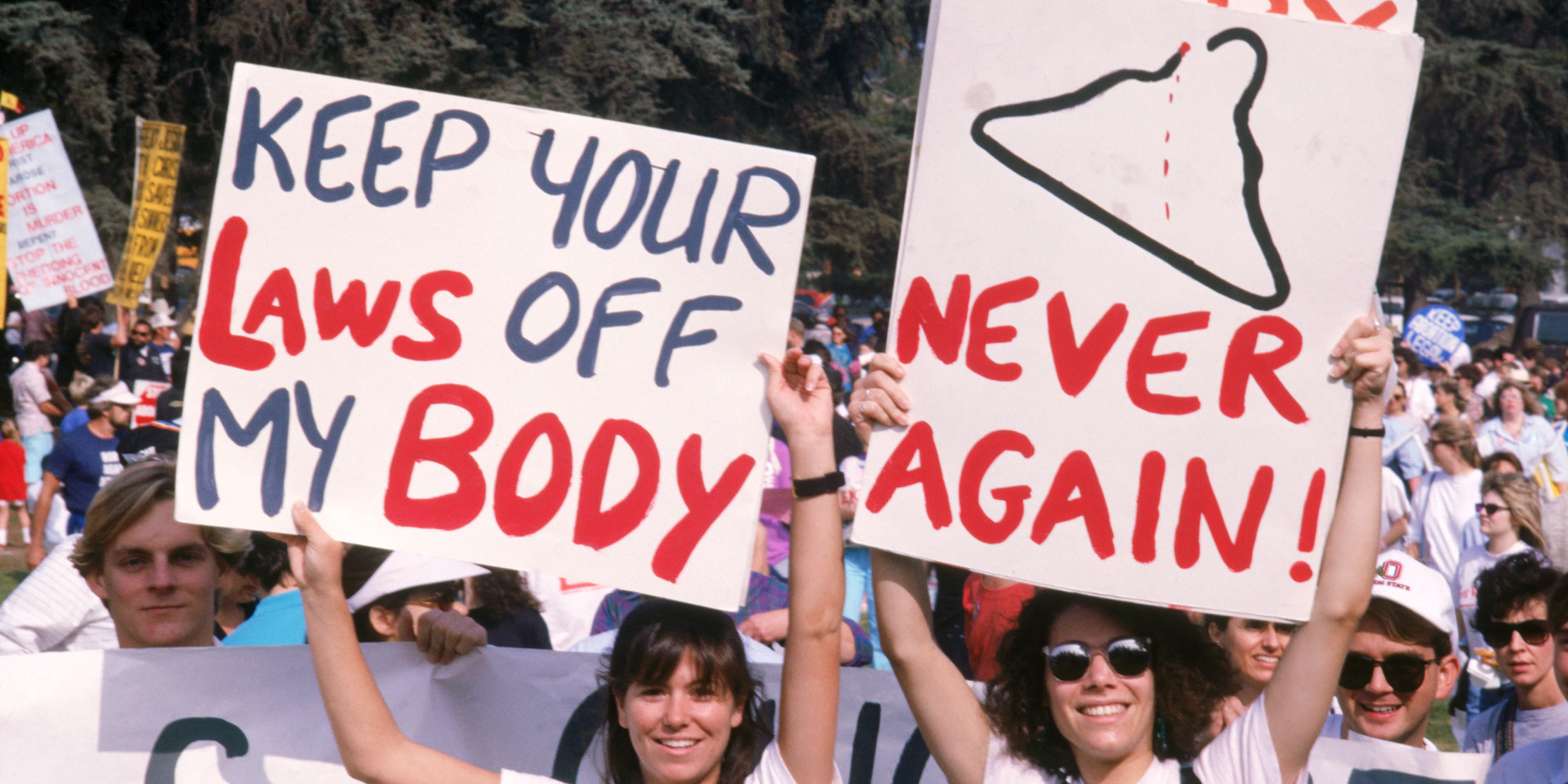
Pro-choice women protesting.

The same process of policing women has spread to other aspects of our lives in a more accepted way, through media and advertising. The ‘rules’ are enforced no longer solely from the people in suits, but from our friends and family, and many times ourselves. The media is so pervasive in everyone’s lives that it is not seen as a dangerous medium, and even when it is, it is physically inescapable so the messages it sends cannot help but be internalized. This is especially true of adolescents; the prime target for many advertisements. Much of the policing begins at this stage, Jean Kilbourne explains how: “Most teenagers are sensitive to peer pressure and find it difficult to resist or even to question the dominant cultural messages perpetuated and reinforced by the media. Mass communication has made possible a kind of national peer pressure that erodes private and individual values and standards, as well as community values and standards” (129). Advertisements should no longer be considered a passive medium because its messages become values that can carry on through adulthood. The message becomes that women should not be taken seriously.

The obsession with taking apart women’s bodies and removing women’s agency over their own bodies has detrimental effects on other aspects of her daily life. One of the aspects greatly affected is women’s progression in the workplace. It is extremely difficult for women to be taken seriously when employers’ perception of women is so distorted. Moreover, when women are pregnant, a natural occurrence and what society deems a norm for women, they are often times no longer considered a candidate for promotions or deemed competent by her peers.

The media dangerously mixes sex and gender. Judith Butler writes, “When the relevant “culture” that “constructs” gender is understood in terms of such a law or set of laws, then it seems that gender is as determined and fixed as it was under the biology-is-destiny formulation. In such a case, not biology, but culture, becomes destiny” (11). This has been the consequence of policing over made up gender norms. The sex of human beings is no longer significant because culture will determine the gender for everyone, and how they should be treated because of it. Our biology's natural essence is trumped by rules and regulations.


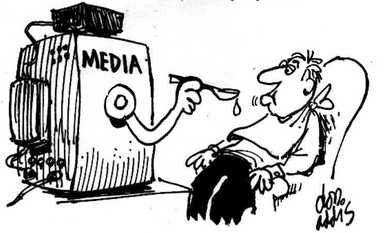
Cartoon depicting how the media feeds us all we know while we
passively take it.
Media only seems to be getting worse with time. Its messages are blatant, and it is accepted because it becomes comical to poke fun at women’s issues on television and other forums speaking to the masses. The lighthearted approach to these issues has caused people to turn a blind eye to the real consequences behind the jokes. This makes it so that anyone that points out problems in the media is seen as radical, and too uptight, or even paranoid, all of which I have heard as I speak about the things I have learned in this class. The media has found a way to desensitize the public and the almost sure way to wash oneself of these effects is to learn to be media literate. Awareness is key. As Susan Bordo explains everyone ‘knows’ that advertisers use all sorts of methods to get the consumer to purchase and that the images they use are not real, but if it is not “meaningful or usable knowledge” then this ‘knowing’ is just as foolish as not knowing at all! (104) Let’s know and use that knowledge as a tool for a greater purpose.

Work's Cited
Bordo, Susan. "Hunger as Ideology." Unbearable Weight: Feminism, Western Culture, and the Body. Berkeley: U of California, 1993. 99-105. Print.
Butler, Judith. "Subjects of Sex/Gender/Desire." Gender Trouble Feminism and the Subversion of Identity. 2nd ed. New York: Routledge, 1990. 1-46. Print.
Kilbourne, Jean. "The More You Add The More You Subtract: Cutting Girls Down To Side." Can't Buy My Love: How Advertising Changes the Way We Think and Feel. New York: Touchstone, 1999. 128-154. Print.
Nash, Elizabeth, Rachel Benson Gold, Andrea Rowan, Gwendolyn Rathbun, and Yana Vierboom. "Laws Affecting Reproductive Health and Rights: 2013 State Policy Review." State Trends for 2013 on Abortion, Family Planning, Sex Education, STIs and Pregnancy. Guttmacher Institute. Web.
Nelson, Jennifer. "Introduction: From Abortion to Reproductive Rights."Women of Color and the Reproductive Rights Movement. New York: New York UP, 2003. 1-20. Print.
Srinivas, SIri. "In Their Own Words: Women Who Faced Demotions after Maternity Leave." The Guardian. Guardian News and Media Limited, 6 Jan. 2015. Web.